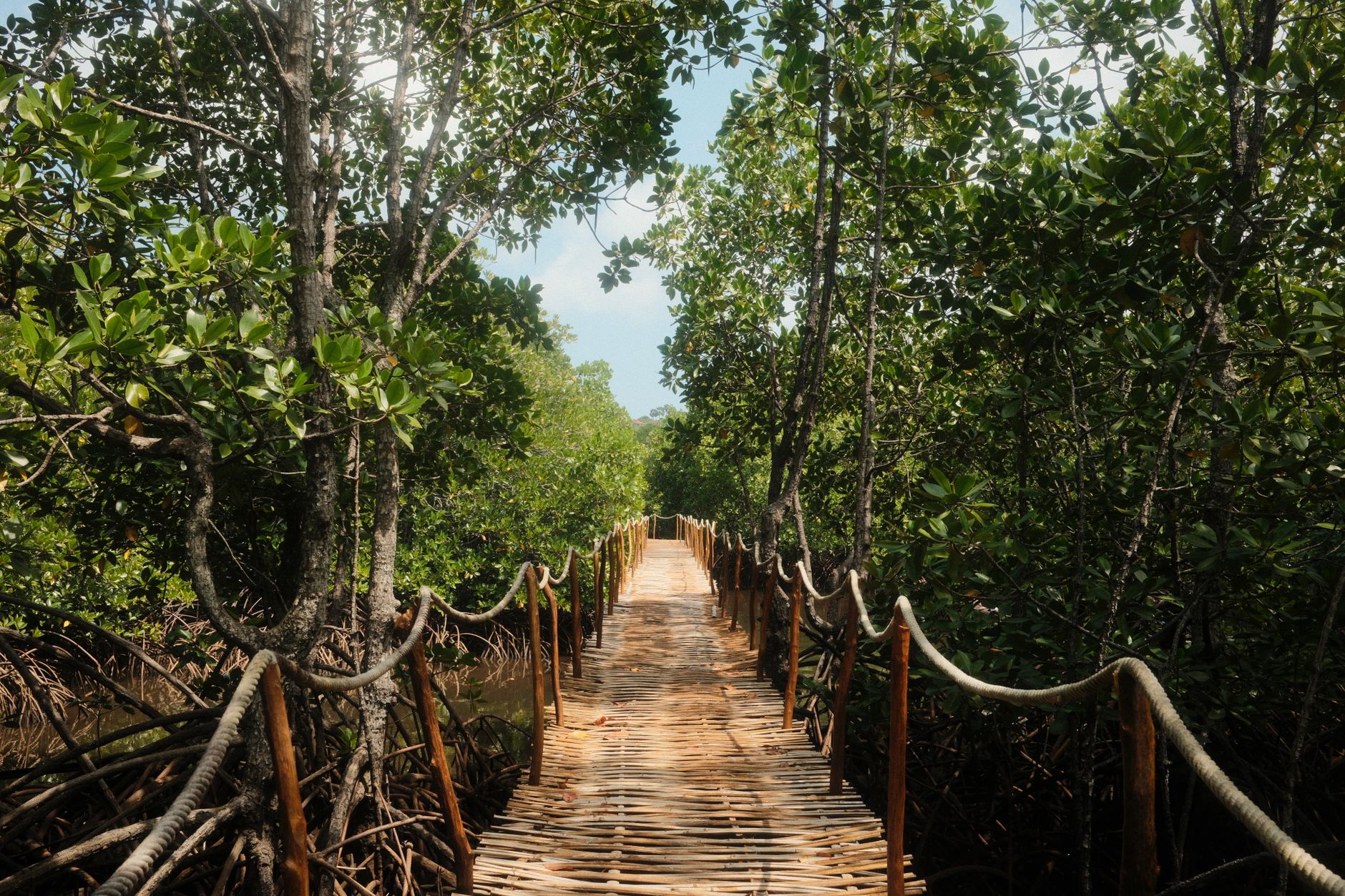
Kilifi Creek is a practical stop on Kenya’s coast, especially if you are linking a safari to a beach stay. It is a tidal estuary beside Kilifi town, about 55 kilometres north of Mombasa. The creek offers mangroves, dhow trips, sunsets, hotels and local character. If you are planning a first safari, this creek is easy to add to the coast section of your route.
What Is Kilifi Creek and Where Is It?
Kilifi Creek is a tidal estuary on Kenya’s coast beside Kilifi town, roughly 55 kilometres north of Mombasa. The creek connects the Indian Ocean with inland lagoon and mangrove habitats. This creates calm waterways, mudflats, beaches and fishing areas. Kilifi Bridge provides one of the easiest viewpoints over the creek.
The water level changes with the tide, so the landscape looks different in the morning and the late afternoon. At low tide, wide mudflats appear and small boats sit tilted on the banks. At high tide, the channel fills and dhows move easily under the bridge. For a quick view, walk across Kilifi Bridge or head down to the Old Ferry. The ferry crossing is short, but it puts you at water level where you can watch local life and boat traffic.
This is not a place you need to spend a week. One or two relaxed days are enough to see the creek, eat well and take a boat trip before you continue along the coast.
What Is There to Do Around the Creek?
The main activities around the creek are taking a dhow or small-boat trip, watching sunset from Kilifi Bridge or Old Ferry, swimming where local conditions are safe, exploring mangroves, enjoying waterfront meals and visiting nearby community areas. Boat hire and informal cruises can usually be arranged locally, but prices and departure points vary.
A popular plan is an afternoon dhow cruise that leaves before sunset and returns as the sky turns orange. Some trips stop at small beaches or mangrove channels. Others simply sail and serve snacks. Ask what the boat includes before you agree on a price. Also agree on the route and the length of the trip first.
If you prefer land, walk along the quieter roads near the bridge, visit the craft stalls in Kilifi town, or ask about community visits. Some local travel notes mention a goat farm near the creek as an informal stop. Community projects change, so ask at your hotel for something that is currently open to visitors.
Can You Swim in the Creek?
Swimming is possible in selected calm sections of the creek, but visitors should ask locally about tides, currents, boat traffic, water quality and safe entry points. A dhow cruise is the classic creek experience, especially in the late afternoon when the light is best for sunsets.
Do not assume the whole creek is safe. The outer section near the ocean can have stronger currents, and the channel under the bridge gets busy with boats. Mangrove roots are also not a place to splash around. They are fragile and the water is often shallow and muddy. The safest approach is to ask the manager of your hotel or a trusted local operator. They can tell you where residents swim and whether the tide is right on that day.
Are There Good Hotels and Restaurants Near the Creek?
Accommodation around the creek ranges from waterfront hotels and resorts to smaller lodges, camps and self-catering stays near Kilifi town. Choose the location based on whether you want direct water access, a quieter mangrove setting, restaurants nearby or easy road connections. Confirm seasonal opening dates, boat access and swimming conditions directly before booking.
For first-time visitors, a hotel with a pool or a private stretch of calm water takes away the worry about swimming. Smaller guesthouses in Kilifi town are often cheaper, but you may need a short taxi or tuk-tuk ride to reach the water. Restaurants near the bridge draw a steady crowd at sunset, and seafood is the usual highlight. When you compare options, look at the map rather than only the photos. A room described as having creek views may still be a walk from the water.
If you want a livelier beach town with more resort choice, compare this creek with the Diani Beach guide. Diani has a different beach setup and is better for travelers who want more restaurants and activities within walking distance.
What Is the Best Time to Visit the Creek?
The best time for clear coastal weather and boat trips is generally during the drier periods, especially January to March and late June to October. April to July and October to December include Kenya’s main rainfall seasons. Showers and changing water conditions can affect plans, although greener scenery and fewer visitors may reward flexible travelers.
| Period | Weather and water | What it means for your visit |
|---|---|---|
| January to March | Hot and mostly dry | Best chance of calm afternoons for dhow trips and sunsets; book ahead for holiday crowds |
| April to July | Long rains and some storms | Lush mangroves and fewer visitors; boat operators may pause in heavy showers, so stay flexible |
| August to October | Warm and fairly dry | Reliable for swimming and boat trips; a good time to combine a safari with the coast |
| October to December | Short rains arrive | Greener scenery and lower hotel prices in some places; carry a light rain jacket and check daily forecasts |
If you are visiting after a safari, remember that the best month for the coast may not match the best month for wildlife. May and November can be quieter in the parks, which lines up with Kenya’s shoulder-season travel advantages. That trade-off matters more than a single cloud in the sky.
Safari prices also shift with the season, so check the Kenya safari cost guide before you lock in dates.
How Do You Get to the Creek from Mombasa and Malindi?
The creek is reached by road through Kilifi town, about 55 to 65 kilometres north of Mombasa and south of Malindi. Private transfers and taxis are simplest for travelers carrying luggage. Matatus can reach Kilifi town before a local taxi or tuk-tuk continues to the chosen access point. Allow extra time for coastal traffic.
Kilifi sits directly on the main coast road, so buses between Mombasa and Malindi pass through town. If you drive yourself, the bridge and the ferry are both easy to find. For safari travelers, the most convenient route is usually to fly from an inland park to Mombasa, then take a transfer north. If your bag is heavy, think about leaving luggage between a Kenya safari and the coast so you can move with just a daypack.
What Wildlife and Mangroves Live in the Creek?
The creek supports mangroves, mudflats, seagrass or reef-associated habitats, fish nurseries and local fishing communities. Research records extensive mangrove cover and high fish diversity. Community groups around places such as Kidundu work to restore and protect mangrove areas. Visitors can help by using local guides, avoiding litter and never damaging roots or wildlife habitat.
Mangroves do more than line the shore. Their roots shelter young fish and crabs, and they hold mud in place during strong tides. Look for birds along the water’s edge, including herons, egrets, kingfishers and sometimes ospreys. You may also see small fishing boats that depend on the creek’s health. Treat the mangroves like a living habitat, not a jungle gym. Stay on paths and take plastic rubbish away with you.
If you are keen on wildlife, you can add a night game drive at a Kenyan park before or after your coast stay. Nocturnal wildlife experiences before or after the coast are a good way to see animals that sleep through the day. The creek’s birdlife is interesting, but it will not replace a safari.
How Do You Plan a Kilifi Creek and Safari Trip?
A creek visit works best when you place it after a safari, before a beach stay, or as a calm break on a longer coast drive. The Kilifi area is compact, so you do not need many transfers once you arrive. Most travelers spend one or two nights here, then continue toward Diani, Watamu or Malindi.
The most common route is to fly from a park such as the Masai Mara to Nairobi or directly to the coast, depending on the operator and season. If you are still choosing your safari route, start with the Masai Mara guide to compare park length and travel time. A park-to-coast transfer works well when you keep your luggage simple and give yourself a full day for weather or traffic delays.
For a slower trip, use Mombasa as a base and take a private transfer north to the creek. This works if you also want to visit the city or arrange shopping. If you are visiting the south coast, compare the Diani Beach guide again before you decide how many nights to split between the creek and the beach.
Do not try to pack too many stops into one week. A calmer itinerary with two or three bases usually feels better than a rushed loop. Kilifi Creek is a good middle point when the coast highway is busy, but it is not a substitute for a full beach resort stay.
What Do Travelers Ask About the Creek?
People search for the creek because they want to know where it is, whether swimming is safe, how far it sits from Mombasa, when to visit, and what the short story is about. The short answers below cover those questions quickly, including the honest limits of current information.
Where Is the Creek?
The creek is beside Kilifi town on Kenya’s coast, approximately 55 kilometres north of Mombasa. It is a tidal estuary connected to the Indian Ocean and can be viewed from Kilifi Bridge or reached through local access points.
Can You Swim in the Creek?
Swimming is possible in some calm sections of the creek, but conditions depend on tides, currents, water quality and boat activity. Ask residents or a qualified local operator for the safest entry point. Avoid swimming alone or in unfamiliar mangrove channels.
How Far Is the Creek from Mombasa?
The creek is roughly 55 to 65 kilometres north of Mombasa by road, depending on the destination and route. The journey commonly takes around one to one and a half hours in light traffic, but coastal congestion can make it longer.
What Is the Best Time to Visit the Creek?
The drier months, particularly January to March and late June to October, usually offer the most reliable conditions for dhow trips and outdoor activities. Rain can occur during April to July and October to December, but those periods may bring greener scenery and fewer visitors.
What Is the Short Story Called “Kilifi Creek” About?
It is a short story by Lionel Shriver originally published in The New Yorker in 2013. The story follows a woman staying on the Kenyan coast whose daily swims lead to a frightening encounter, giving it a tense psychological-thriller atmosphere.
Where Can I Find a Goat Farm Near the Creek?
A specific goat farm with an official visitor address is not easy to verify from a distance. If you heard about one, ask at your hotel, a local guide, or someone in Kilifi town. Community projects change, and a resident can point you to one that is currently open to visitors.
Where Can You Compare Safari Operators for a Kilifi Creek Trip?
To see the creek as part of a longer Kenya trip, think about the order of your safari and coast stops. Compare safari operators at FindMySafari, browse packages at Valley Safaris, or see current options at Trunktrails Safaris. A good operator can match the bush part of your itinerary with a calm day on this coast.